
The 40 Percent
Everyone's measuring this transition by how much faster it is. That's the least interesting part.


Every conversation about AI in advertising eventually lands in the same place: it’s faster now. Faster turnarounds, leaner teams, cheaper production. Ask a holding company exec, a procurement lead, a CMO they’ll all reach for the same currency. Time saved. Cost removed. Hours that used to take days now take minutes.
It’s not wrong. It’s just the least interesting thing happening right now, and the industry keeps talking as if it’s the whole story.
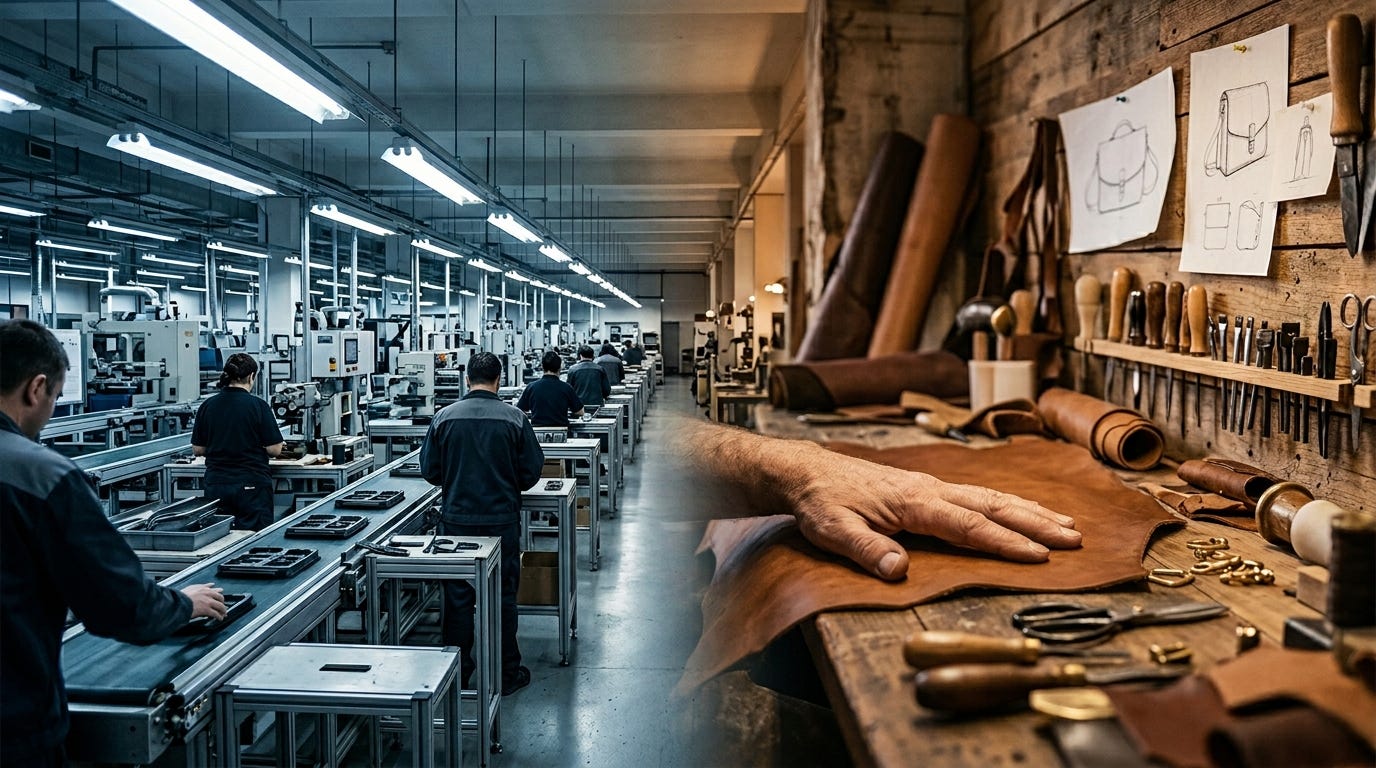
That reflex isn’t an accident. It’s inherited. For decades, the industry built its operating model hub-and-spoke entirely around the language of volume and cost. A centralized hub, usually offshore, usually cheap, absorbed the bulk of execution: the adaptations, the localizations, the templated production that didn’t require deep market judgment, just efficient hands at scale. The spoke local, smaller, more expensive per head held the high-value talent who understood the market well enough to make the centralized work land. The whole structure was a cost equation dressed up as a strategy. So when a new technology shows up, the only question the industry knows how to ask of it is: does this make the equation better?
For AI, the answer is obviously yes. Which is exactly the problem with stopping there.
The 60% that's already solved
Call it the 60% the volume work, the version-and-adapt production line, the stuff the hub existed to do cheaply at scale. AI is genuinely faster at this. Variations, resizes, localizations, the high-volume low-judgment execution that used to require rooms full of people working in shifts a single person directing the right tools can now do a meaningful chunk of it themselves, faster than any hub ever could. Fine. Good, even. But treat it as the headline and you’ve mistaken the part of the story that was always going to resolve itself for the part that actually matters. Efficiency was never the destination. It’s the thing that buys you room to do something else.
The burden nobody resourced for
Here’s what’s actually landing on local teams right now, whether anyone signed off on it or not.
The spoke’s job used to be narrower than what it’s being asked to do today. Local talent held market relevance and creative judgment, the things that couldn’t be centralized because they depended on being close to the audience. Consistency, the brand staying coherent across every market, was something the hub’s process and templates were supposed to guarantee from a distance. That division of labor made sense as long as the hub’s volume work was the expensive part and the spoke’s local judgment was the scarce part.
AI breaks that division without replacing it with anything cleaner. It doesn’t eliminate the need for a hub by being a better hub. It removes the cost penalty for doing high-volume work locally, which means the reason centralization existed in the first place is that cheap scale stops being the binding constraint. And it does this at the exact moment content is becoming genuinely personalized, not just localized. Personalization isn’t a bigger version of the old adaptation work; it requires reading the audience signal close to real time, which is structurally a local problem, not a centralizable one.
So local teams are inheriting three things simultaneously: the consistency that used to be enforced from a distance, the local relevance that was always theirs, and now a requirement to be data-literate creatives who can build work that actually responds to a person rather than a market segment. Nobody resourced for that third thing. It wasn’t in the job description, the training budget, or the way these teams get measured. The industry just started expecting it, quietly, as a byproduct of the tools getting better, without doing the harder work of deciding who’s supposed to carry it or how.
That’s the part of this transition I find most honest to sit with not because it’s a crisis, but because pretending it isn’t happening doesn’t make it stop happening.
The 40% where the actual work is
Here’s the part that gets buried under all the speed talk: the 40% nobody’s built yet.
If AI gets you 60% of the way there faster, the question that actually matters is what you do with the time and capacity that frees up. Not “how do we hit the deadline now,” which is just the old job done quicker. The real opportunity is the desire to create for the part that doesn’t have a name yet new ways to discover what an audience actually responds to, new ways to design for a person instead of a segment, new ways to deploy work that adapts itself rather than getting adapted by a production line after the fact. That’s not speed. That’s invention.
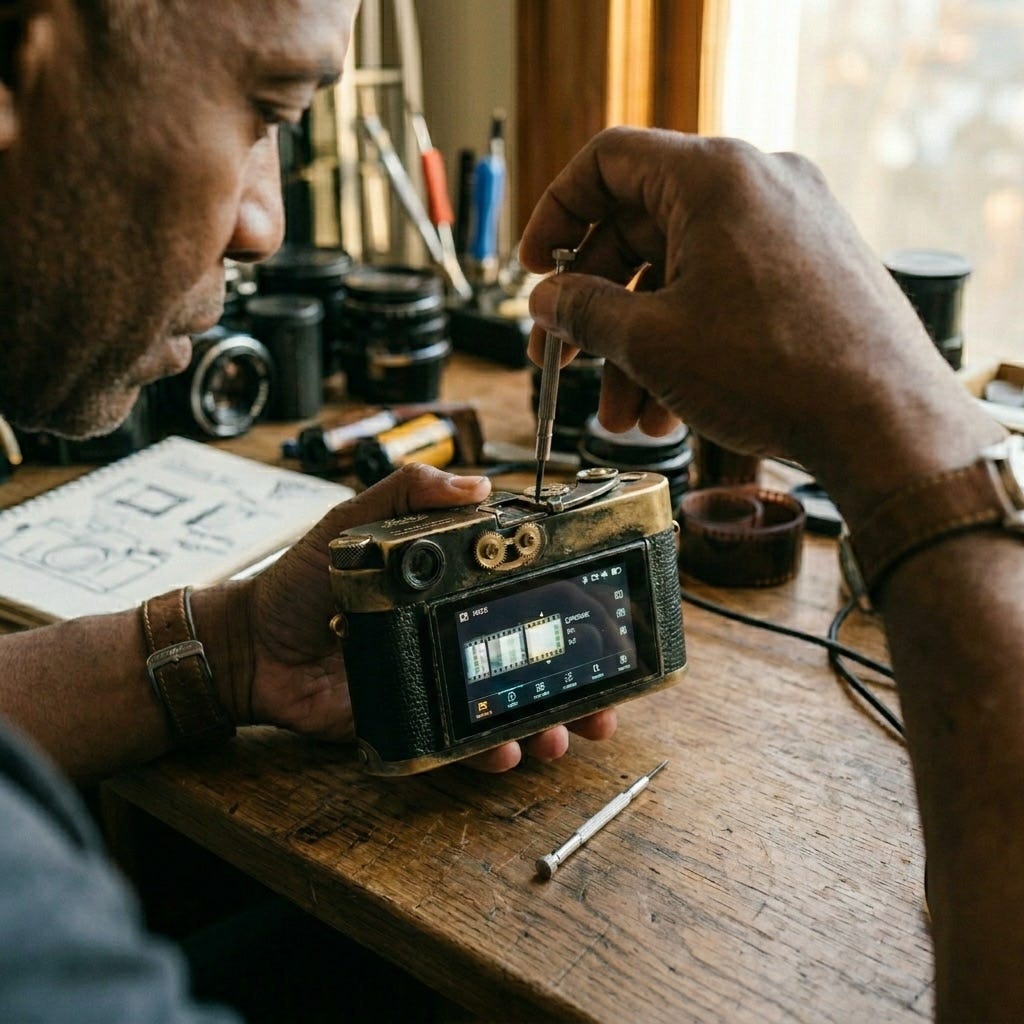
This is where craft has always lived, and it isn’t going anywhere it’s relocating. The tool doesn’t make the move. It never has. A camera doesn’t compose a frame and a turntable doesn’t make a record sing; the eye and the hand do that, whatever the tool happens to be. What AI does is hand local teams more room to exercise that judgment, earlier, against more options, faster than they’ve ever had before. The craftsperson who leans into that isn’t protecting their relevance by getting faster. They’re protecting it by being the only one in the room who knows what to do with the room they’ve been given.
What the industry owes this, if it wants the upside
None of this works if the industry takes the capacity AI frees up and just asks for more output at the same headcount, with the same training budget, measured the same way it always has. That’s the failure mode sitting right in front of this transition treating the 40% as a bonus the spoke should produce for free because the tools got better, instead of treating it as a genuine expansion of the job that needs its own investment.
What local teams actually need isn’t another dashboard fed by a distant hub. It’s their own sovereign capability, something that belongs to them and the brand they’re serving, not to whichever vendor happens to be running the production line this quarter. A model where local talent can hold consistency, read their own signal, and build the 40% themselves, instead of waiting for permission or infrastructure to trickle down from a centralized function that was never built to do this kind of work in the first place.
Where this leaves the industry
The industry will keep grading this transition by the 60%, because that’s the only scoreboard it knows how to read. Time saved, cost removed, turnaround compressed, easy to measure, easy to put in a deck, easy to defend to a holding company board. The 40% doesn’t show up on that scoreboard. It’s harder to quantify, slower to prove, and entirely dependent on whether local teams are given the room, the tools, and the trust to go build it.
Which means the people actually doing that work may have to build the scoreboard themselves, before anyone hands it to them.
Disrupting the Algorithm / The Bodega · Scope Creep · Singapore · © 2026