

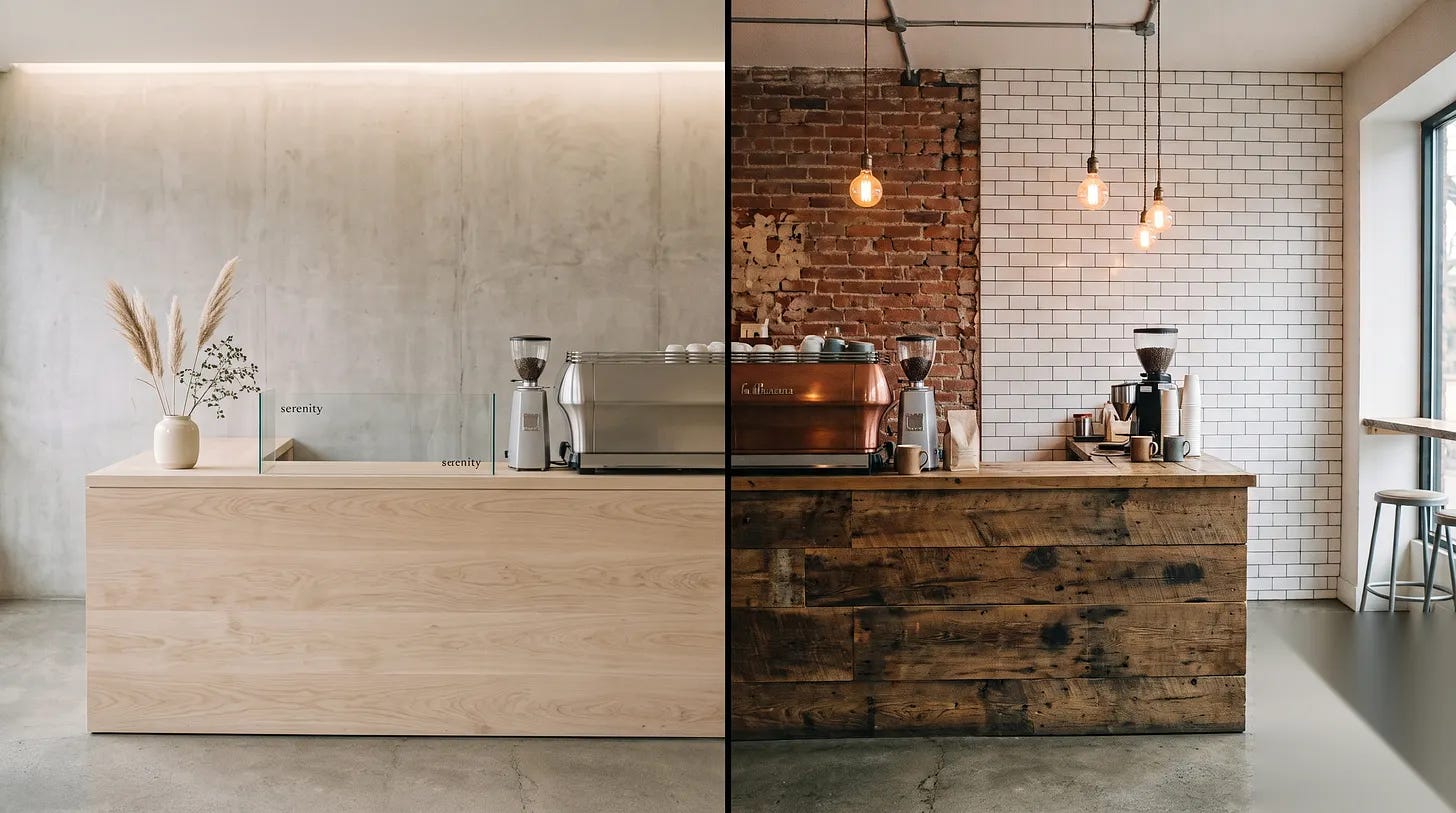
There’s a café near my workplace I could describe without ever having been inside it and it wouldn’t matter which one, because there are several within a five-minute walk, and they’re nearly indistinguishable. Pale wood, raw concrete, a single lowercase word stencilled on the glass, a plant in the corner that isn’t real. This is the backdrop here: Singapore, and most of Asia I’ve spent time in, has converged on a kind of Muji-fied minimalism, all restraint and negative space. Fly to Brooklyn or Lisbon and the backdrop flips to its opposite twin: exposed filament bulbs, reclaimed wood, subway tile, deliberately unfinished. Two aesthetics that look nothing alike, and yet both are the same phenomenon wearing a different regional costume. The floor plan changes. The mechanism underneath it doesn’t.
That low-grade vertigo everywhere and nowhere at once is the feeling this piece is actually about. Something has happened to the texture of culture. Not its content, exactly. Its elevation. The peaks and valleys that used to separate one place, one sound, one scene from another have been sanded down to a single, consistent grade. Culture got flat.
This isn’t a new observation Kyle Chayka gave it a name and a book-length argument in Filterworld, tracing how recommendation algorithms across Spotify, Instagram, Airbnb, and Google Maps quietly converged the world’s aesthetic output toward the same optimized middle. What I want to do here isn’t repeat that diagnosis. I want to press on it to ask what flatness actually costs, in the specific rooms I’ve spent my life in, and to argue that the algorithm isn’t just curating culture badly. It’s replacing the mechanism that used to make culture uneven in the first place. That unevenness wasn’t a flaw waiting to be optimized away. It was the whole engine.
But first, the evidence. Flatness shows up in three places I keep returning to in this newsletter, which tells you something about where I think the damage actually lives.
Space
The café is the easiest tell because it’s architectural you can stand inside the sameness, in either of its regional costumes. It’s about what happens when a physical space stops being of somewhere and starts being legible to something: it needs to photograph well and read as “aesthetic” to an algorithm sorting images by engagement, not feel like the street it’s on. The room stopped answering to the block outside it and started answering to the feed above it and the feed doesn’t care which costume it’s wearing, minimalist or industrial, as long as it performs.
I grew up around rooms that answered to nothing but the people in them all-ages matinees in halls that smelled a specific way, shops with hand-lettered price tags and a wall that told you what the owner thought was good, whether you agreed or not. Those rooms were illegible on purpose; you had to show up to know what they were. Algorithmic space does the opposite, optimized to be understood instantly, by anyone, from a thumbnail. Legibility at that scale is incompatible with specificity. You can have one or the other, not both.
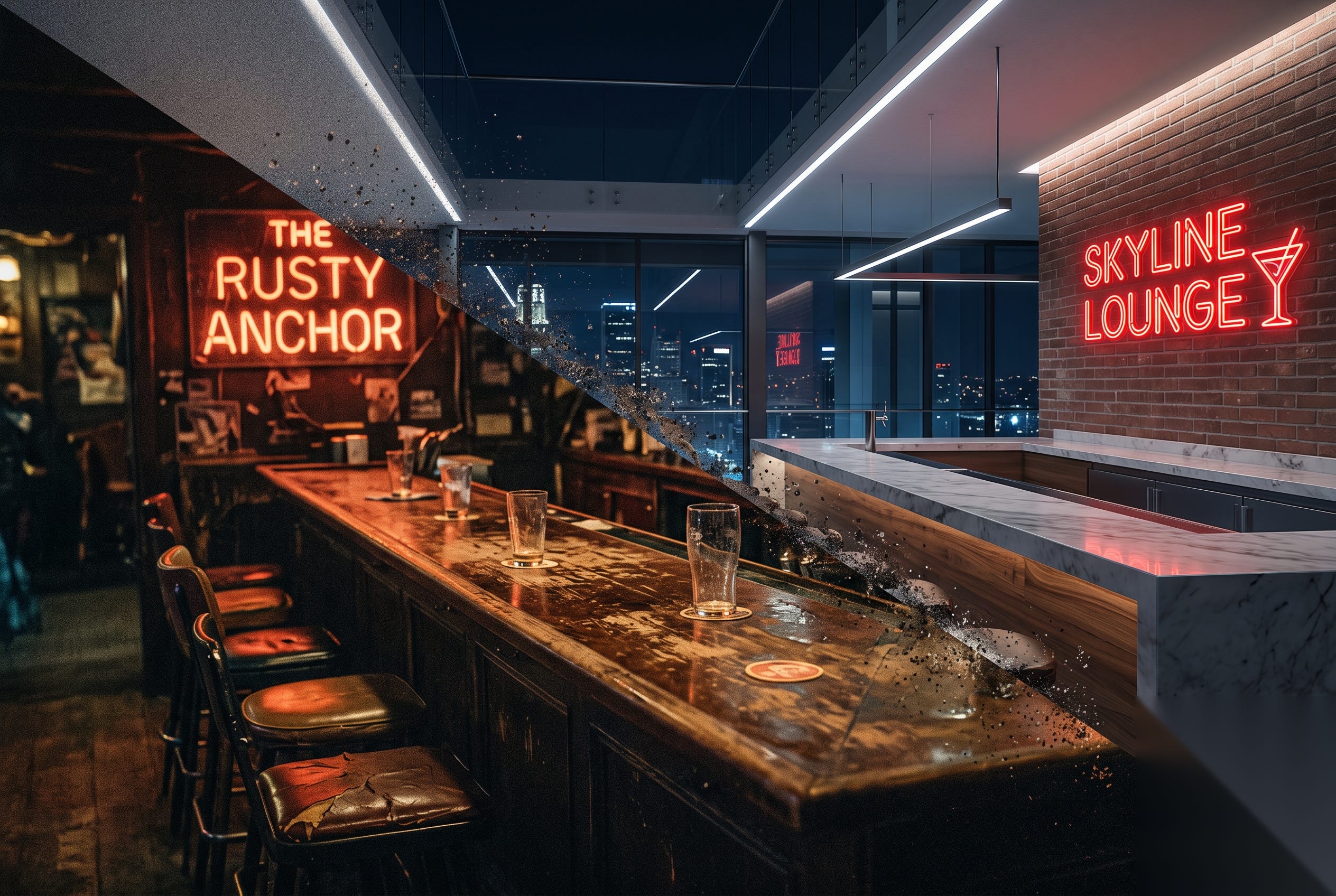
New York’s dive bars are dying of exactly this. Jimmy’s Corner, a boxing bar just off Times Square since 1971, is fighting to survive a landlord dispute after its longtime owner passed. Happy Village, a Chicago saloon that had been pouring drinks since the 1870s, was bought out and razed a vacant lot now, reportedly earmarked for something “fancy.” The New York Times recently reported on this decline directly, and the reporter’s own definition of what a dive bar actually does cuts straight to the point: a dive, she writes, brings together people who would otherwise never be in the same room. That’s not incidental color. That’s the entire mechanism this piece is about, confirmed independently by someone who wasn’t trying to make my argument.
What’s replacing these places is a simulacrum rooftop bars borrowing the dive aesthetic, none of the actual unpredictability. The look survives. The collision doesn’t. This deserves its own piece. I’ll come back to it in Collision Points soon. For now it’s the sharpest proof I’ve found that flatness isn’t only happening to feeds and playlists. It’s happening to rooms with addresses, right up until the lease runs out.
Sound
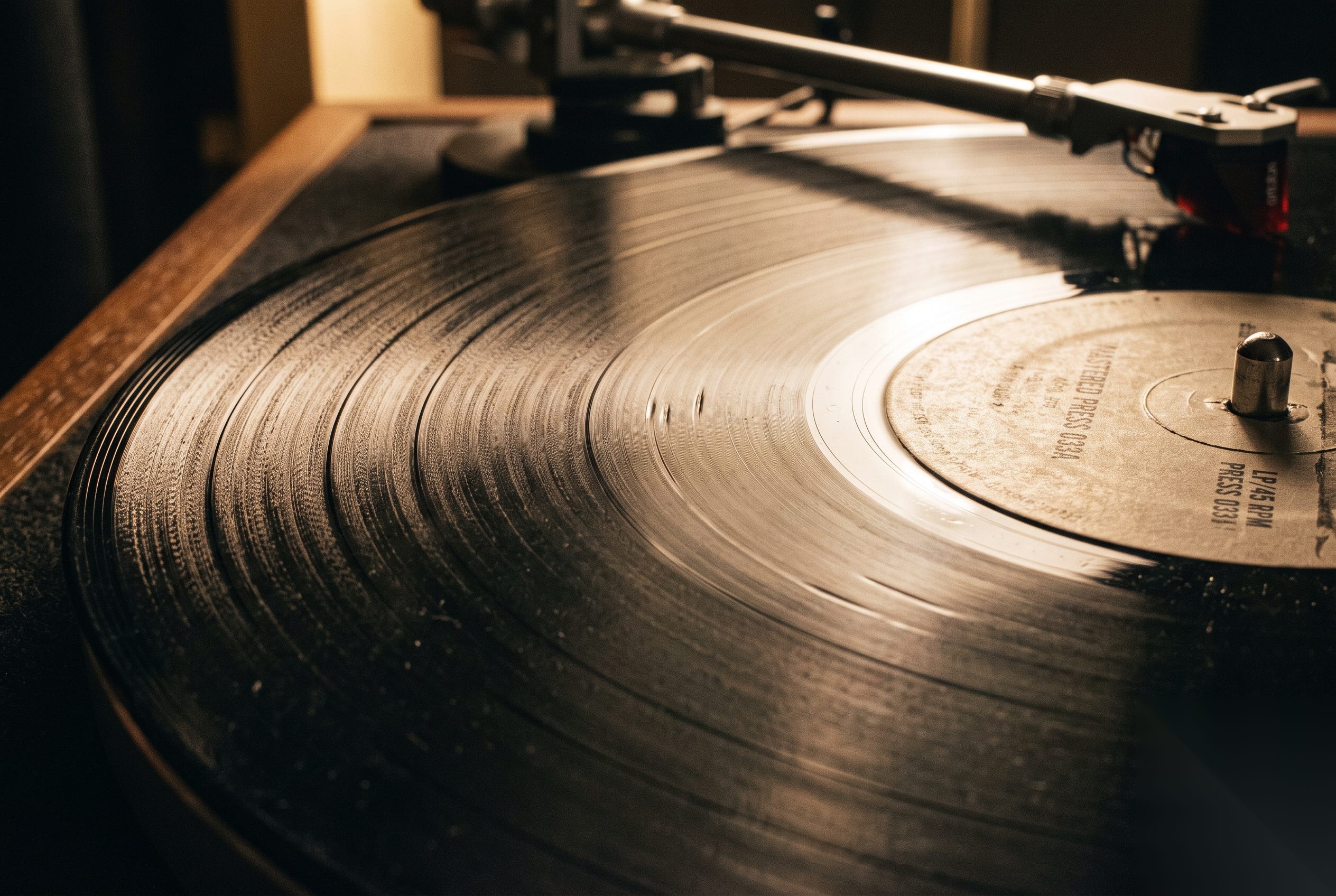
Same mechanism, different medium. A song built for a platform that autoplays in three-second increments has to front-load its hook; slow builds are a liability when the algorithm’s attention span is the only one that matters commercially. Not bad music, exactly music shaped by a distribution system rather than by what the artist actually heard first. The intro gets shorter. The chorus arrives faster. Bridges disappear because nobody scrolls that far in.
I think about this against the records I grew up loving, the ones I still write about in Against the Algorithm. Coldcut’s Journey by DJ doesn’t arrive anywhere quickly; it’s a journey because it insists on being one, and refuses to compress itself for an audience it never had to court. That kind of patience used to be a viable commercial choice. Now it’s closer to a countercultural one. Songs that used to earn your attention over four minutes now have to fight for it in the first four seconds and the ones that don’t fight, don’t get heard, not because they’re worse, but because the system was never built to notice them.
Style
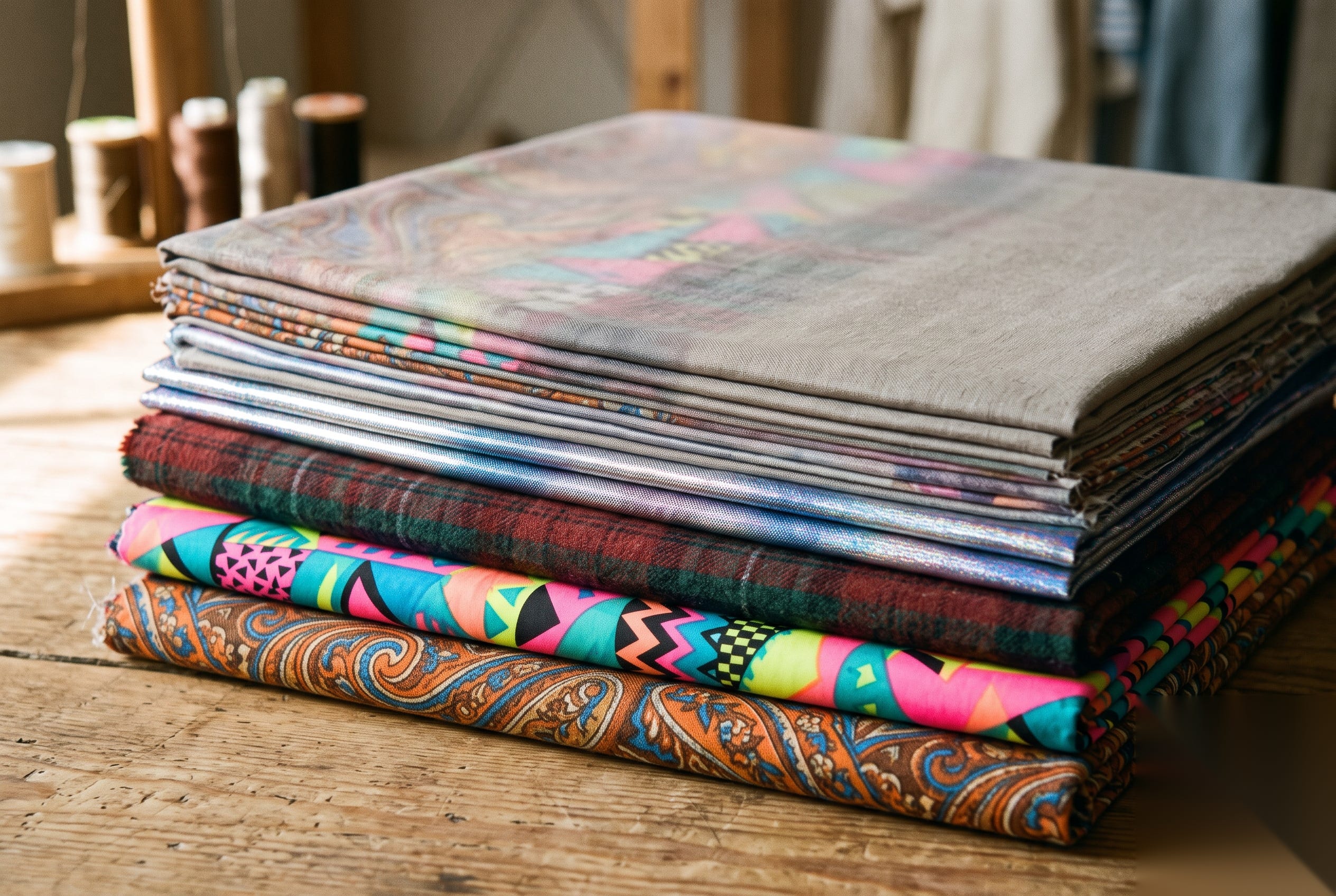
This is maybe the strangest flattening of the three, because it collapses not space but time. Fashion used to run on what insiders call the twenty-year rule a look surfaces, dominates, fades, and returns two decades later, recontextualized by whoever was too young to catch it the first time. Y2K nostalgia hit right on schedule in 2021. One culture writer clocked something specific the following year: the aesthetic had already moved on into 2000s territory, a full decade ahead of schedule. It’s one observer’s read, not a hard statistic but it captures a feeling a lot of people online have named independently: cycles that used to take decades now seem to clear in a season.
The clearest confirmation of what’s driving this didn’t come from a critic. It came from Miuccia Prada, at her own Spring/Summer 2025 show, describing how designers themselves now work: we are directed by algorithms, she said taste itself, arriving pre-instilled rather than discovered. Style used to have a memory; you could date a photograph by what someone wore, because eras were legible. Now it mostly has an inventory, restocked on whatever cycle the feed can sustain, with no twenty years required to earn its way back.
I’m not going to pretend this is neutral. I’m mourning something in these pages, not just diagnosing it you can probably hear that by now. But mourning isn’t the same as accusing. Nobody at Spotify or Airbnb sat in a room and chose flatness as a goal. Recommendation systems optimize for legibility for how confidently a system can predict what you’ll respond to next because confidence is what turns attention into revenue. So everything that made a café, a record, or an outfit hard to predict the specific, the local, the historically weird gets quietly selected against. Not by decision. By what a system built to be sure of itself can and can’t afford to reward. The grief is real. The villain isn’t.
Which is where I think the missing piece of Chayka’s argument actually lives. He’s right that algorithms flattened culture. But he stops at diagnosis; the fix he lands on is mostly structural: fewer algorithms, more human curators, deliberate friction reintroduced from the top down. What I keep coming back to, from the other side of this from the physical rooms I grew up in, the ones I’ve written about here before is that friction was never something you could reintroduce by policy. It has to be produced, the way it always was: by unplanned proximity between people who wouldn’t otherwise have ended up in the same room.
That’s the collision principle, even if I don’t always call it that on the page. The skate shop that didn’t ask where you were from, only what you could do. The basement show where the guy next to you was into something you’d never heard of and made you listen to it, loudly, whether you wanted to or not. The record store clerk who put something in your hands because he thought you should hear it.
That clerk was predicting, too he’d read you, made a bet, handed you a record based on a guess about who you were. So the difference was never prediction versus no prediction. It’s what the prediction is for, and whether you can see the logic doing it. The clerk was optimizing for something like your taste, or his own conviction that you’d grow into the record even if you didn’t love it yet and if you asked him why, he’d tell you, and it might even be wrong, but it would be a reason. The algorithm is optimizing for how long you stay, how reliably it can keep predicting you next time, and it’s built specifically so you can’t ask it why and get an answer that means anything. That’s the actual gap. Not unpredictability. Legibility, and what the prediction is in service of.
Flatness, then, isn’t a design flaw in the algorithm. It’s what culture looks like once you’ve engineered the unpredictable proximity out of how it gets made. You don’t get flat culture by making bad choices. You get it by removing the mechanism that used to make choices strange, local, and slightly inconvenient in the first place and replacing it with one whose entire job is to make sure nothing ever surprises it again.
The cafés near my workplace will probably still be there next year, in whichever regional costume, indistinguishable from a hundred others. What I’m less sure will still be there — unless people go looking for it on purpose is the room that couldn’t be predicted from outside. The one you had to show up for. The one that didn’t care how it photographed.
That room is still where the real thing happens. It’s just gotten a lot harder to find.
WHERE THINGS MEET . WHAT SURVIVES THE IMPACT